Dolomite Horizons: The Poetics of High-Altitude Silence in Late Autumn
When the cable cars cease operation and the larch forests turn incandescent yellow, northern Italy reveals its raw geological core.
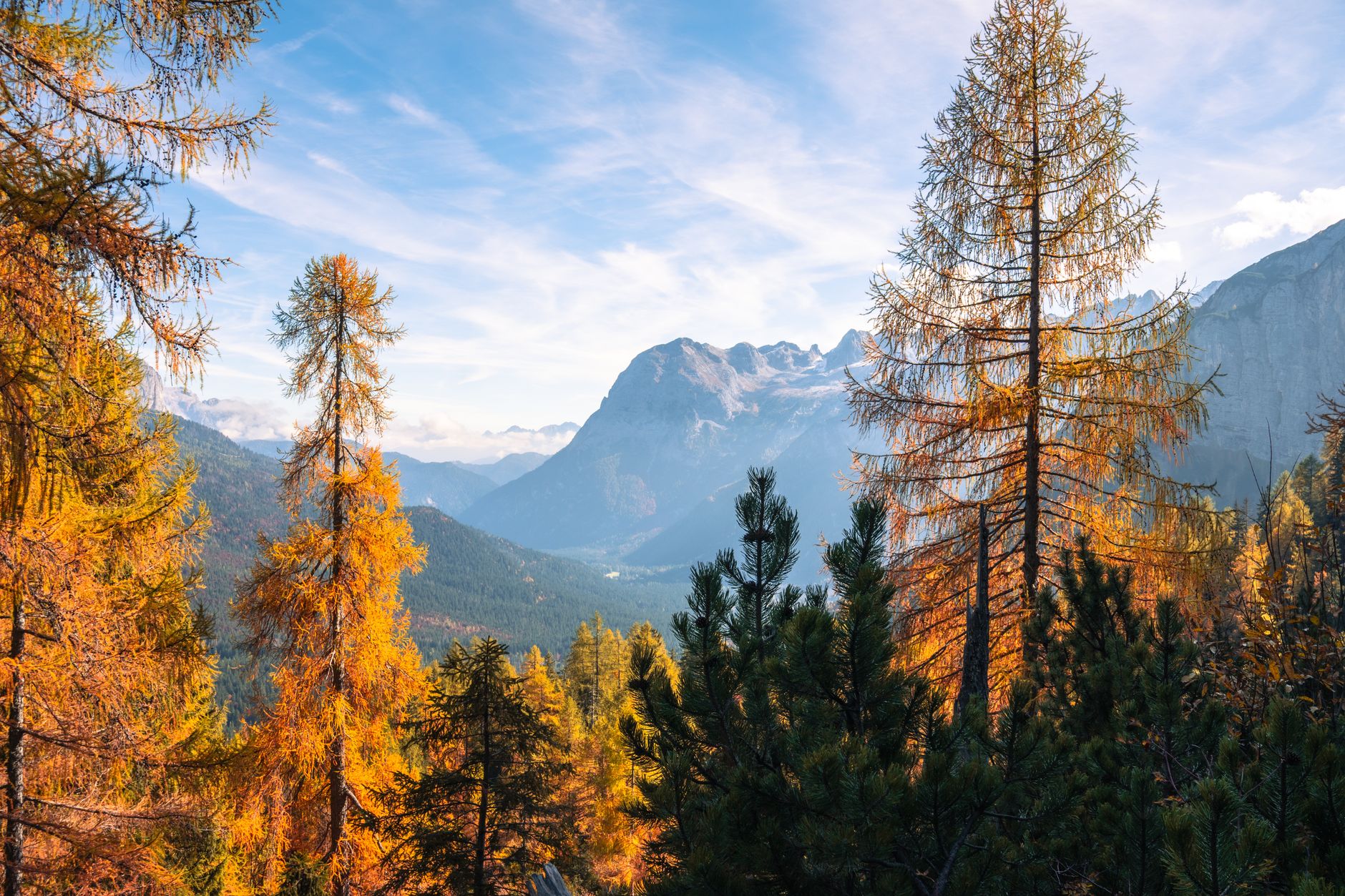
In late October, the Dolomites undergo a dramatic transmutation. The summer via ferrata enthusiasts and vehicular queues over the Sella Pass vanish entirely. The rifugios shutter their wooden shutters, and an immense, monumental stillness descends over the pale carbonate towers.
Dolomitic rock, named after French geologist Déodat de Dolomieu, is ancient coral reef fossilized over hundreds of millions of years. When the low autumn sun strikes the vertical faces of the Tre Cime or the Marmolada, the stone flashes with intense hues of apricot and rose before cooling into an icy, impenetrable violet.
“To stand at 2,400 meters in complete windless silence is to experience scale in its purest philosophical form.”
Walking the Val di Funes
In the valley floors, meadows that sustained livestock throughout the warm months are now cropped short and tinged with morning frost. The onion-domed chapel of St. Johann in Ranui stands framed against the sheer needle walls of the Odle Group, looking like an intentional architectural homage to the sublime.
Late autumn in the high valleys reminds us of the value of off-season journeys. Without distraction, one engages intimately with the geological structure of the earth and the resilient mountain heritage preserved by Ladin-speaking communities.